
Video Modeling
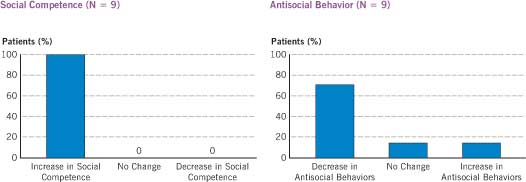
A Cleveland Clinic study showed rates of improvement in social competence and decreased antisocial behavior with the Model Me Kids® videos. The research comes from a 12-week social skills group
Download Study (PDF) >>

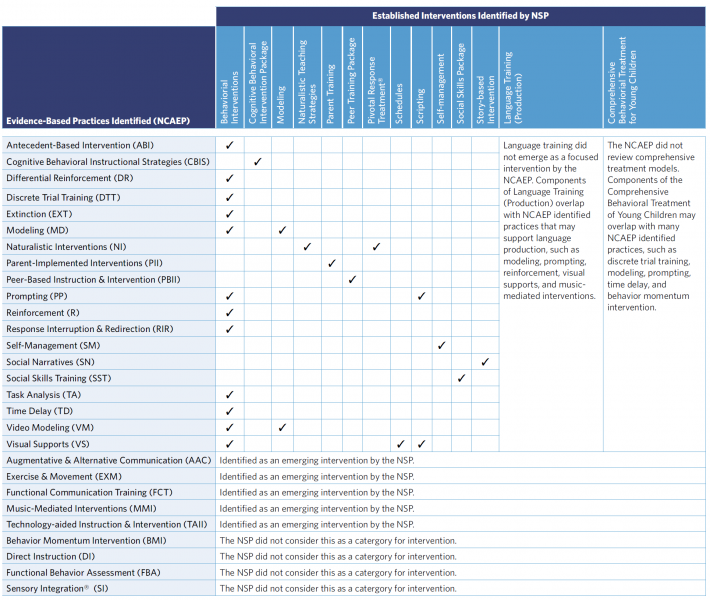
According to the National Professional Development Center on Autism Spectrum Disorders, video modeling meets evidence-based practice criteria. NCAEP (2020) and the National Standards Project (NSP, 2015) published reports of their systematic reviews of the literature and identification of EBPs.
VIDEO MODELING STUDIES
(Download PDF)
Evidence-Based Practice (EBP)
Using Video Modeling to Teach Perspective Taking to Children with Autism
Perspective taking refers to the ability to attribute mental states of others in order to explain or predict behavior. In typically developing children, this skill develops around age 4 (Baron-Cohen, Leslie & Frith, 1985), but is delayed or absent in children with autism (Happe, 1994). The present study used video modeling to teach perspective taking to 3 children
with autism. A multiple baseline design across children and within child across tasks assessed learning. In addition, generalization across un-trained similar stimuli was assessed.
Video modeling was a fast and effective tool for teaching perspective taking tasks to children with autism, resulting in both stimulus and response generalization. These results concurred with previous research that perspective taking can be taught. However, unlike other studies, there were wider ranges of generalization.
-Marjorie Charlop-Christy, Ph.D. and Sabrina Daneshvar, Journal of Applied Behavior Analysis, Summer 2003.
Social Skills Curriculum
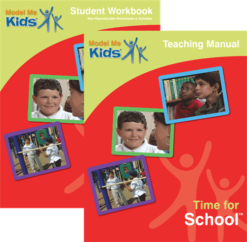
We offer teaching manuals and student workbooks for use with the Model Me Kids videos. Create a social skills curriculum based on video modeling, an evidence-based practice, and thereby reinforce the video lessons. Teach – Practice – Generalize
ShopInformation for districts
Teaching Complex Play Sequences to a Preschooler with Autism Using Video Modeling
“The identification of efficient teaching procedures to address imaginative play skills deficits commonly seen in children with autism is a challenge for those designing treatment programs. In the present study video was used to teach play skills to a preschool child with autism. Videotaped play sequences included both verbal and motor responses. A multiple baseline across three response categories (tea party, shopping, and baking) was implemented to demonstrate experimental control. Neither experimenter implemented reinforcement nor correction procedures were used during the intervention.
Results showed that the video modeling intervention led to the rapid acquisition of both verbal and motor responses for all play sequences. As a result, the video modeling teaching procedure was an efficient technique for teaching relatively long sequences of
responses in the absence of chaining procedures in relatively few teaching sessions. Additionally, the complex sequences of verbal and motor responses were acquired without the use of error correction procedures or explicit, experimenter implemented reinforcement contingencies.”
-Patricia D’Ateno, Kathleen Mangiapanello, Bridget A. Taylor, Journal of Positive Behavior Interventions, Winter, 2003
Video Modeling Effectiveness
“Two new studies at Indiana University demonstrate that videos depicting exemplary behaviors can be effective in helping children and adolescents with autism spectrum disorders develop social skills and daily living skills…Results from the meta-analysis indicate that both video modeling and VSM meet the Council for Exceptional Children’s criteria for evidence-based practices. Improvements were most evident in the area of functional skills, followed by social-communication skills and behavioral functioning.”
– Bellini, S. & Akullian, J. (2007), A meta-analysis; Exceptional Children, 73, 261-28.